There are moments in history where those involved know they are witnessing something significant. More often than not, however, the full importance of those events only becomes clear in time.
The latter best describes the inaugural FIA GT3 European Championship meeting at Silverstone on 6/7 May 2006. To most observers it seemed like the launch of yet another GT category. Few if any knew they were on the ground for the birth of a global racing phenomenon.
One man who might have had an inkling is Stéphane Ratel, whose SRO concern organised the FIA GT Championship and would lead the charge with GT3. The motivation was twofold: tackle soaring budgets and better serve amateur drivers, then as now the backbone of GT racing.
"The cost of GT2 had become unsustainable and it was being dominated by two manufacturers," explains Ratel. "We had a lot of interest from teams and from tuners, which convinced us to launch a standalone series rather than integrate GT3 as a class within the FIA GT Championship.
"At the same time, we introduced a number of features – such as the sprint format of two one-hour races, with each car shared by two drivers – which had been pioneered in the Lamborghini Super Trophy. So we had a sense that it could be successful."
Among its key innovations, GT3 would make use of existing car models, thus saving manufacturers considerable investment, and their performance would be balanced to maintain parity. Ratel took the concept to the FIA and received full backing from then-president Max Mosley.
In December 2005 a launch event was held in Monte-Carlo and, less than six months later, the first race exclusively for GT3 cars was held at Silverstone as part of the circuit’s Supercar Showdown. Headlined by the FIA GT Championship, the weekend featured further support races from Ferrari Challenge and the Maserati Trofeo, bringing around 150 GT cars to the British venue.
Among the teams to sign up for the inaugural FIA GT3 season was Barwell Motorsport, which remains active in the category today. Barwell also participates in the GT3 Revival Series, giving team boss Mark Lemmer a panoramic view of the GT3 category.
"Unlike just about every other fledgling series, this was unique because of Stéphane’s requirement for six cars per manufacturer," recalls Lemmer, whose team ran a trio of Aston Martin DBRS9 in ‘06. "We had close to 50 cars on the grid for the first ever race, which was absolutely mind-blowing."
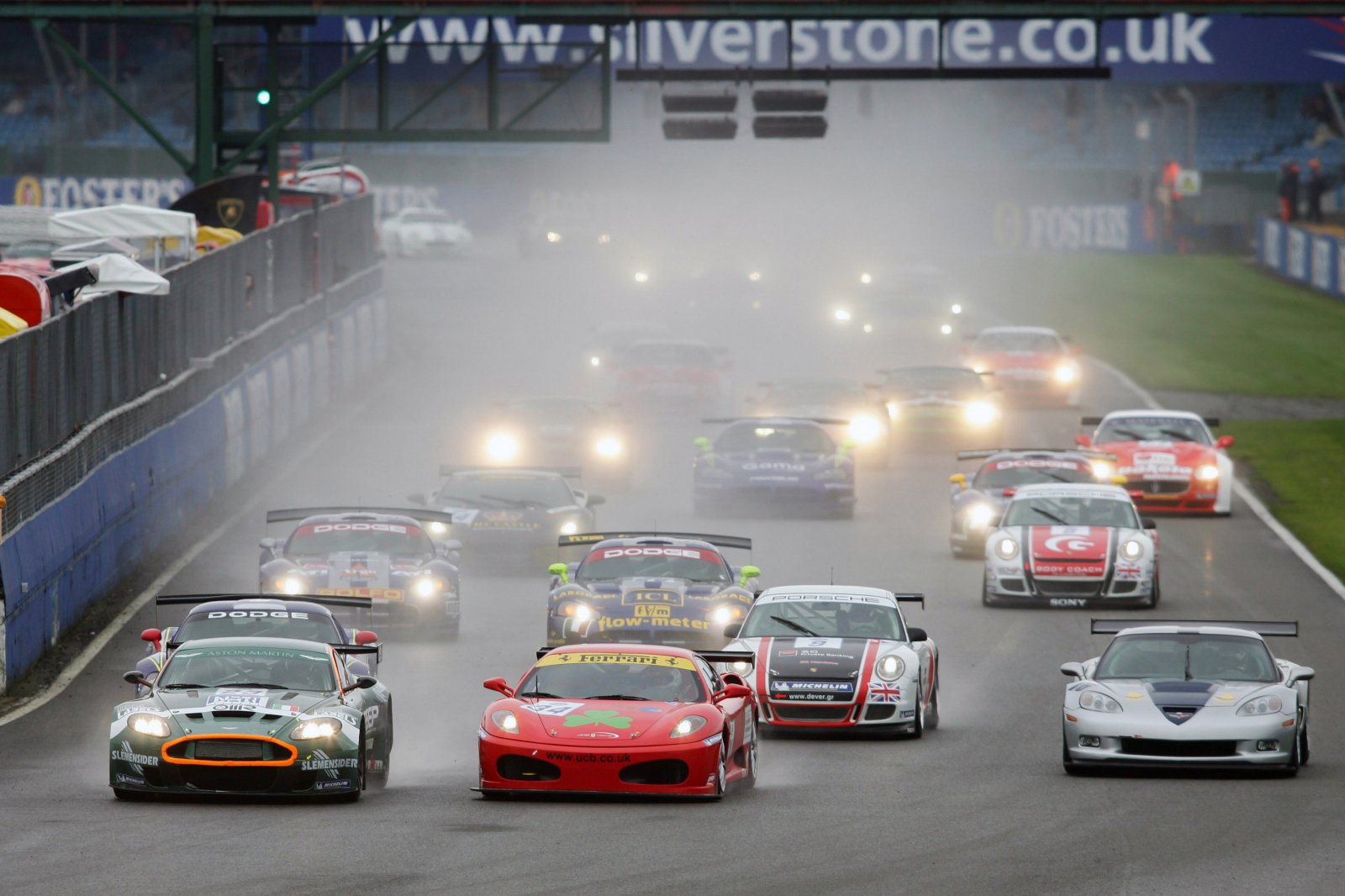
The final entry stood at 44 cars, with eight manufacturers represented at Silverstone. Aston Martin (DBRS9), Corvette (Z06), Ferrari (430 Challenge), Lamborghini (Gallardo) and Porsche (997 GT3 Cup) remain active in the discipline today, while Ascari (KZ1R), Dodge (Viper) and Maserati (GranSport Light) were there for the launch.
Among the Ferrari entrants was the familiar British GT pairing of Hector Lester and Allan Simonsen, who along with their engineer John Buchan, had joined forces with Monegasque squad JMB Racing. Buchan takes up the story.
"JMB had two cars and they were having difficulty finding a third, so Stéphane suggested we talk. Hector and I met up with them on a test day at Dijon and decided to go ahead with it. The next time we saw them was at Silverstone.
"I prepared our car in Scotland and brought it down. We converted it to GT3 spec, which was basically a different bumper, a splitter, and a rear wing; I think that's about all. Then we gave it a go, and Allan put it on the front row."
A word on drivers. It would be fair to say that Max Verstappen’s recent GT3 exploits are the equivalent of Michael Schumacher racing GT cars two decades ago, but Schumi would not have been permitted to race in FIA GT3. The series effectively prohibited professionals, with the grid predominantly made up of amateurs alongside a handful of rising stars such as Simonsen and eventual champion Sean Edwards.
"This was very much aimed at the gentlemen drivers," says Ratel. "We put rules in place about levels of experience and skill, including the exclusion of works drivers and those with a strong single-seater career."
An exception was made for three-time Le Mans winner Klaus Ludwig, who was accepted on the basis of his age. The 56-year-old may not have been the youngest driver on the grid, but he was still quite capable of being the fastest, which he made very clear by taking pole position for the opening race. Simonsen came within 0.133s of matching the veteran German ace but had to settle for second.
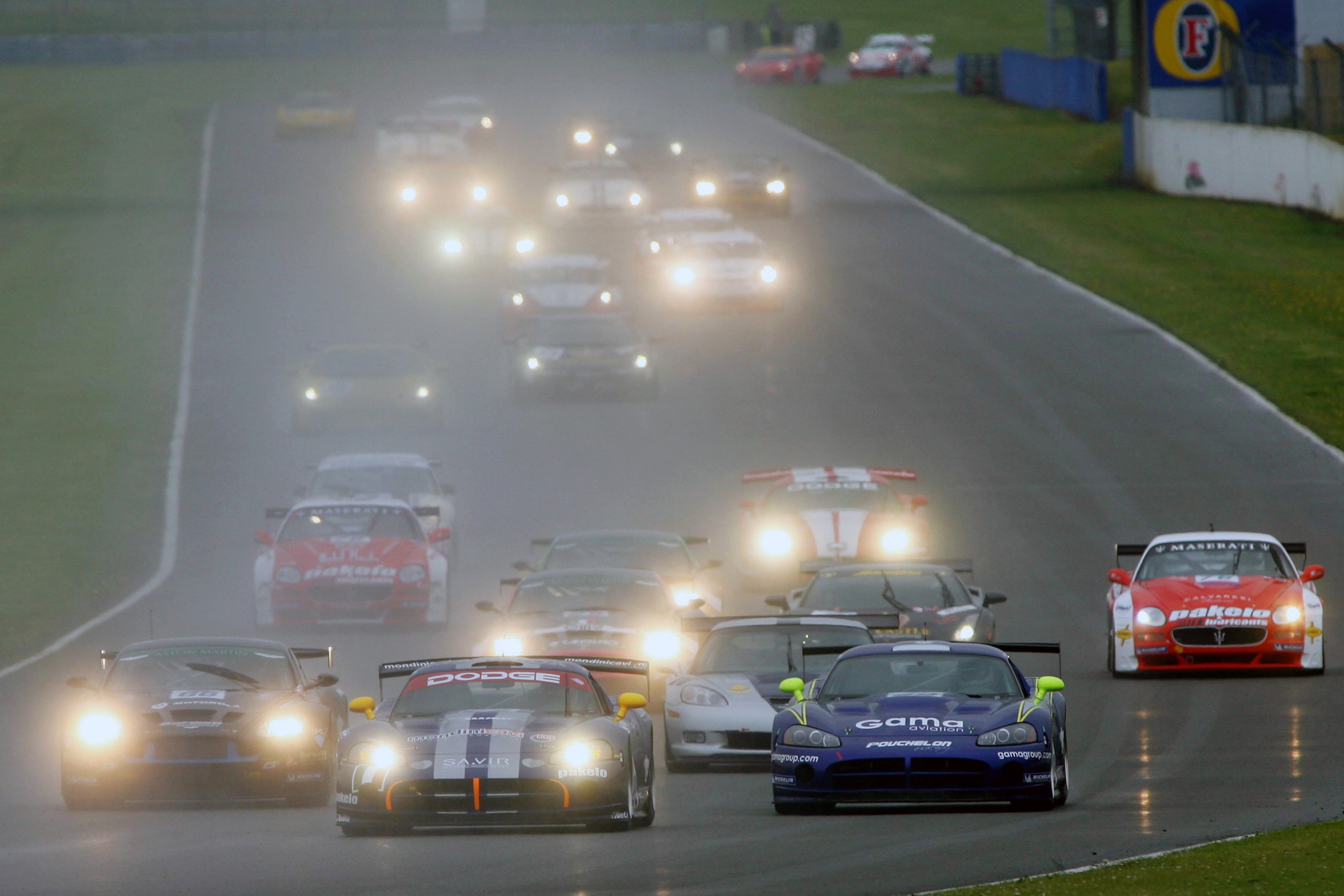
The rules mandated that the faster driver from each crew – invariably the pro – must start Race 2, and so it was Lester who occupied the JMB-run 430 for the inaugural contest. Rain was falling when the cars got underway, and this contributed to a collision that sent Lester into a spin on the first lap.
A pair of Dodge Vipers dominated the opening phase, but the momentum shifted again during the second half of the hour-long race when the track began to dry. Watching this unfold as he prepared to take over behind the wheel of the recovering Ferrari, Simonsen was feeling lucky.
"He suggested we go on to slicks, though it looked too wet," recalls Buchan. "The first few laps seemed to be quite tentative. Then he just drove to the lead."
Buchan’s matter-of-fact description sums it up perfectly: with his tyres coming up to temperature and the track crossing from wet to dry, Simonsen may as well have been driving a GT1 car. The Dane was 10 seconds a lap faster than the leaders and pulling off overtakes at will.
A handful of others had also gambled on slicks, but even they could not stop Simonsen’s charge to the front. On the penultimate lap he deposed Edwards' Porsche to win the first-ever GT3 race.
"I was passing four or five cars a lap, so that was fun!" said Simonsen afterwards. "This championship is fantastic; I mean, who thought that 44 cars would be here for the first round?!"
The JMB Ferrari very nearly made it a clean sweep in Sunday's second contest, which was wet for the duration. Simonsen took the start from 16th but had bolted to the lead by lap four. Lester was two seconds clear at the start of the final tour only to be baulked through Becketts by a slow-moving Corvette. Andrea Ceccato snatched the win in his Viper, sharing the spoils with Stefano Livio.
With a huge grid and two races that were decided on the final lap, the event had been an enormous success. But, as Lemmer recalls, there were still a few creases to iron out.
"Prodrive had underestimated where this car needed to be, so for that first race we had an H-pattern manual gearbox and five-stud wheel nuts!" recalls Lemer. "They quickly realised that this wasn't going to cut the mustard. To their credit, Prodrive reacted brilliantly and by the time we got to the next race, we had single hub wheel nuts and a six-speed sequential gearbox."
While it had been entertaining, it was by no means obvious that this was the future of sportscar racing. FIA GT3 had been positioned as a series predominantly focussed on amateur drivers and with teams rather than manufacturers playing the pivotal role.
But to use the modern parlance, GT3 was about to go on a journey. The ingredients that made it popular from the very beginning – not least the parity between such a large number of manufacturers – would make it an increasingly attractive prospect. Two decades later, it does not simply dominate GT racing: it defines it.
Image: Jakob Ebrey Photography